
 CN
CN

Shortlisting an international school in PJ can feel like the problem is already solved once you have names and fee ranges. In practice, the list makes things harder. There are 19 registered international schools in Petaling Jaya alone. Each has a brochure, a testimonial section, and a waiting list suggesting high demand. The broader international school Kuala Lumpur market adds dozens more options across the city.
The real challenge is knowing which factors separate one school from another in ways that affect your child’s outcomes. Fees and proximity are easy to compare. Curriculum fit, teaching quality, and exam results require a different set of questions. This article breaks down school comparison into five practical dimensions parents can act on before booking a campus tour.
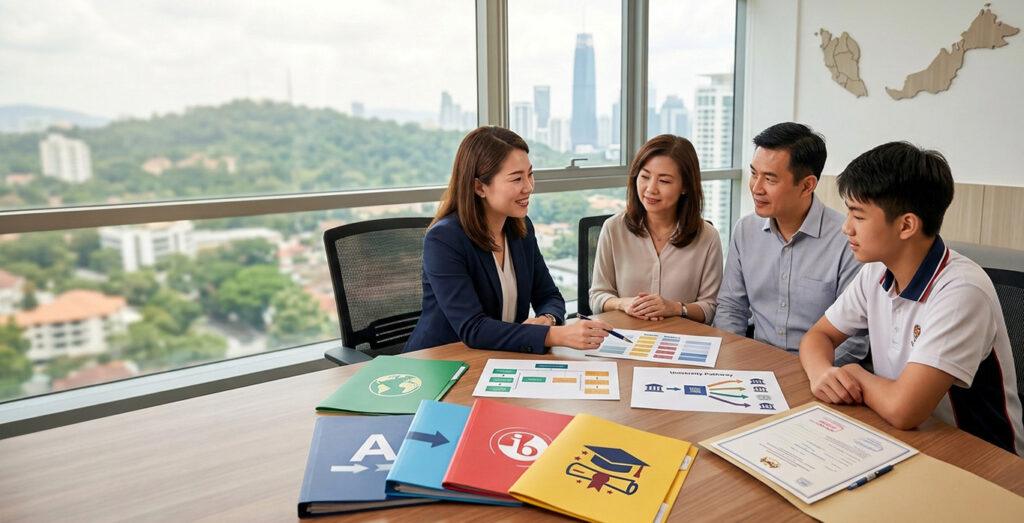
In Malaysia, an international school follows a foreign curriculum rather than the Malaysian national syllabus. Section 79 of the Education Act 1996 (Act 550) requires every educational institution to be registered with the MOE before it can operate. All schools in PJ listed here fall under that register, maintained in the MOE’s SMIPS directory.
According to EduSwasta’s 2026 directory, 19 international schools currently operate in Petaling Jaya. Of those, 14 offer Cambridge IGCSE, five run the IB Diploma Programme, and five offer A Levels. Annual fees across these schools run from RM 19,000 to RM 122,000 per year. The most common pathways in the international school Klang Valley market are Cambridge IGCSE leading to A Levels, the IB Diploma, and the American curriculum. Each has a different assessment structure and leads to different university destinations. Cambridge A Levels align closely with UK and Australian university entry. The IB Diploma is accepted across Europe and North America. The American curriculum suits families targeting US and Canadian institutions.
Curriculum is therefore the first decision when comparing any international school in PJ. Matching the pathway to where your child is likely to study after secondary school narrows the shortlist before you visit a single campus. Searching for a Cambridge school near me already filters out IB and American curriculum schools, focusing the comparison on schools with a shared exam framework.
The most common mistake when comparing schools is treating curriculum as a secondary detail. A child who spends six years in the Cambridge IGCSE system builds a specific academic profile. Mid-stream moves to the IB or a different national system are disruptive for most students. The early question is not which school looks best at primary level, but which curriculum the family is committing to through Year 11.
Subject depth versus breadth is not a style preference. Cambridge rewards specialisation. The IB rewards the student who performs across six subject groups simultaneously. That difference shapes what universities a student can realistically target.
The Cambridge pathway is the most widely available in both the international schools in PJ and the international schools in Kuala Lumpur markets. It offers a clear progression: Cambridge Primary, Cambridge Lower Secondary, IGCSE at Years 10 and 11, then A Levels. Campus Rangers International School has delivered the Cambridge IGCSE curriculum since 2012. It offers the full secondary track, so families don’t need to change schools before university.
The IB Diploma involves six subjects, a Theory of Knowledge component, an Extended Essay, and a Creativity, Activity, Service programme. It suits students who perform consistently across disciplines and can manage ongoing internal assessment alongside external examinations.
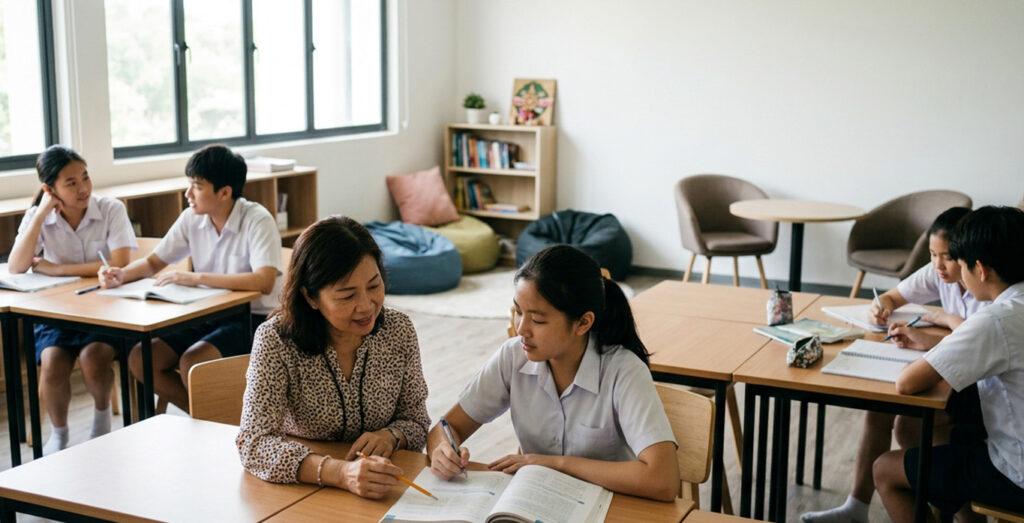
A school’s facilities photograph well. Class size and teacher continuity are harder to see in a prospectus. Both have a more direct effect on how well a student learns than facility photos suggest.
Smaller class environments let teachers catch gaps in understanding before they compound. At larger schools, a student falling behind in Year 8 Mathematics may not be identified until the IGCSE year. By then, time is limited. In a smaller setting, teachers know each student’s pace and adapt accordingly.
Pastoral care is not a soft metric. A student who feels supported attends more consistently, participates more actively, and handles exam pressure better. The pastoral model tells you how a school responds when things go wrong, not just when they go right.
Ask specifically about teacher qualifications, average years of subject experience, and annual teacher retention. These questions are easy to raise and revealing in how schools respond. Campus Rangers operates with over 40 qualified teachers averaging 8 to 40 years of experience. Its track record of 100 percent tertiary progression across five IGCSE batches reflects what consistent teaching quality produces over time.
Most international schools publish results in some form. A school reporting “high A-grade percentages” without specifying cohort size or subjects is not offering data that allows comparison.
The more useful figure is what percentage of graduating students progressed to tertiary education, and how many received scholarships. These are concrete and harder to present selectively. Campus Rangers has achieved at least 30 percent of IGCSE graduates receiving college scholarships across every batch since 2012. All graduates earned sufficient credits to proceed to tertiary study. In the 2022 batch, 75 percent of grades were A* or A, and 94 percent were at credit level or above.
When visiting any Cambridge school near me on your shortlist, ask for IGCSE results from the last three years broken down by subject. Ask what percentage of the Year 11 cohort those results represent.
The distance between a school’s address and the family home matters more in KL traffic than the map suggests. Morning peak hours on the Federal Highway and LDP can turn a 10-kilometre journey into a 45-minute drive. A 7 am departure becomes standard for many families in the corridor, which affects sleep, mood, and attendance.
When evaluating an international school in PJ, ask:
Campus Rangers International School is located at Vivo @ 9 Seputeh, off Jalan Klang Lama. It offers transport services for students within a 7km radius of campus. Families in the Old Klang Road, Kuchai Lama, and Petaling Jaya corridor can reach the school without an impractical early departure.

Annual fees at an international school in Kuala Lumpur or PJ run from around RM 20,000 to well above RM 100,000 at secondary level. That spread is wide enough that fee alone says little about quality. A high-fee school may be charging for facilities that don’t affect academic outcomes. A school with more modest fees may deliver strong exam results through teaching quality and focused academic structure.
What matters more is what the fee actually covers. Registration charges, co-curricular levies, and exam entry fees can add 20 to 30 percent on top of published tuition rates. Ask for an all-in breakdown when comparing schools, rather than comparing headline tuition rates directly.
The value question is separate from the cost question. A school at RM 25,000 per year with verified 100 percent pass rates may deliver more value per ringgit than one at twice the price with opaque results.
As of 2026, 19 registered international schools operate in Petaling Jaya, spanning Cambridge IGCSE, IB Diploma, A Levels, and other curricula. Annual fees range from RM 19,000 to RM 122,000 per year.
Both Cambridge A Levels and the IB Diploma are accepted by Malaysian universities and by institutions in the UK, Australia, the US, and beyond. The practical difference is availability: Cambridge schools are far more common across the Klang Valley.
Ask for the last three years of external exam results broken down by subject and cohort size. Ask for average teacher experience and the annual teacher retention rate. Ask whether fees cover exam entry costs, co-curricular fees, and transport. Ask what percentage of graduates proceeded directly to tertiary education and how many received scholarships.
Campus Rangers International School sits at Vivo @ 9 Seputeh, off Jalan Klang Lama in KL. From most parts of Petaling Jaya, the drive is typically 15 to 25 minutes depending on traffic. The school provides transport services within a 7km radius of campus for families who prefer not to drive daily.
Smaller classes give teachers more time per student and make it easier to identify gaps before they affect exam performance. International schools with secondary class sizes between 12 and 20 students tend to provide more consistent teacher feedback than larger cohorts. Campus Rangers maintains an intentionally small-school setting to preserve that level of individual attention.
The international school Klang Valley market is competitive, which is a real advantage for parents who know what to ask. Schools that consistently produce scholarship recipients and full tertiary progression share common traits. Stable teaching teams, honest results reporting, and structured support from Year 7 through to the IGCSE sitting. To see what that approach looks like in practice, visit Campus Rangers International School at 9 Seputeh and come prepared with the questions above.
 Cambridge Curriculum in Malaysia: What Parents Should Look Beyond the Syllabus
 Secondary IGCSE in KL: What Parents Should Know Before Year 10
 After SJKC: Is an International School in KL the Right Next Step?
 Preschool to Primary in KL: How to Build a Smooth Cambridge Pathway
 Affordable International School in KL: What Does “Value” Really Mean?